Official ash dieback guidance gives no seasoning time for logs, but it is clear about the steps that come first: assessment, safe felling, permissions and what to leave for wildlife.
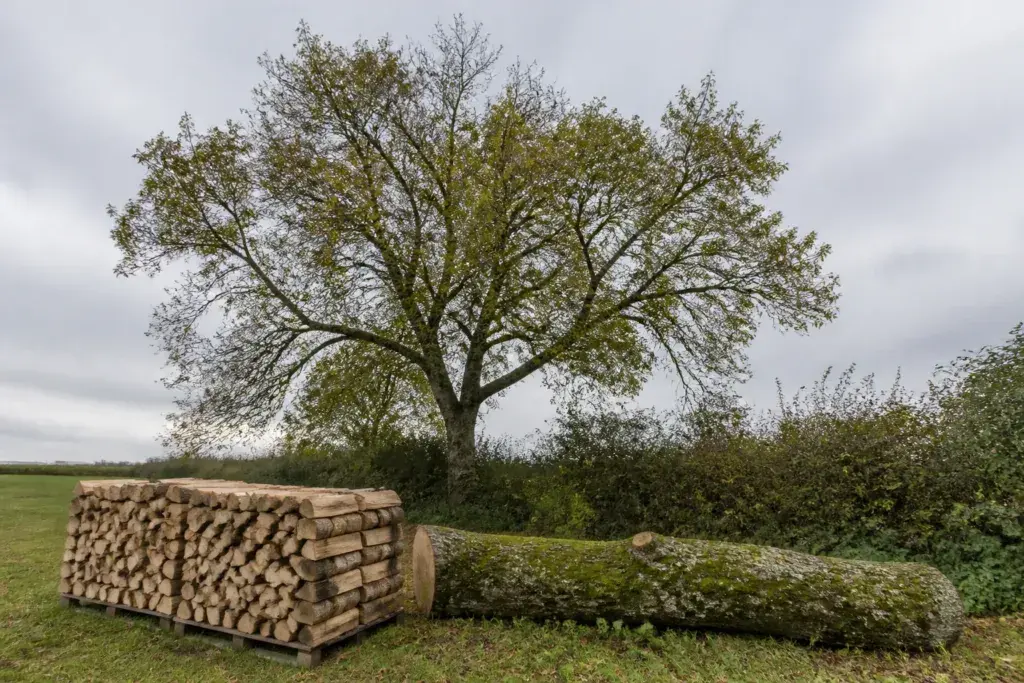
The honest answer on ash dieback firewood is that the official guidance we have drawn on here gives no seasoning time and sets out no rules for burning ash from diseased trees, so we won’t guess one. Forest Research’s Chalara manual has a section on managing ash, including logs and firewood, and that section is the right place to check. What the wider guidance does settle is everything that happens before a log is split and stacked: whether an infected ash needs felling at all, how it should be felled safely, and what permission may be needed.
The reassuring part comes first. Not every ash with dieback has to come down. For property owners with ash on boundaries, field edges or a smallholding, a proper assessment is usually a better starting point than felling.
What the guidance says, and doesn’t say, about ash logs
The Forest Research Chalara manual covers managing ash trees and woodland, including logs and firewood. Its stated principles include “maintaining, where possible, the values and benefits associated with ash woodlands and iconic trees” and “minimising impacts on associated species and wider biodiversity.”
The material we drew on for this piece does not include the text of the firewood section itself. Rules of thumb passed around online may not reflect what that section says about diseased timber, so reading it directly is the sensible course before you plan to burn ash from an infected tree.
Does an ash with dieback need to come down
Often, no. The GOV.UK guidance from the Forestry Commission and Natural England says that felling diseased trees early will not prevent spread, because the disease is already widespread and its spores travel long distances on the wind. Taking down an ash simply because it is infected does not protect the trees around it.
The same guidance gives a useful way to read a tree’s crown (its canopy of branches and leaves). Trees with more than 75% of the crown healthy are considered to have good disease resistance. Trees with more than 50% of the crown affected show little or no growth and are likely to die.
Patience matters too. Natural Resources Wales notes that it can take several years after the disease arrives at a site to identify the more tolerant trees, and that tolerance is thought to be highly heritable. A tree that holds on could be worth keeping for the next generation of ash.
There are points where felling becomes reasonable. In older stands, Natural Resources Wales says felling may be considered where more than 50 per cent of the crown is infected and the tree’s survival depends on epicormic shoots. These are new shoots sprouting directly from the trunk or main branches, often a sign a tree is struggling to keep its normal crown going. In other woodlands, if more than 50 per cent of the ash in a stand is infected, spore production will be very high and condition will decline rapidly, so earlier felling may be appropriate. Secondary infection by honey fungus (Armillaria) can also take hold in the lesions dieback causes, and is often what finally kills ash, especially older trees.
One line in the Welsh guidance is worth holding on to if you are thinking about logs. Stands with infected trees should not automatically be classed as high risk and earmarked for early felling to realise timber value. Firewood is a by-product of a sound decision, never the reason for one.
Which trees to look at first
Natural Resources Wales recommends a risk-based approach built around four steps: survey and monitor, complete a risk assessment, plan and deliver remedial works or adaptive management, then review. The Welsh Government’s policy approach puts it in similar terms: take a risk-based approach, keep people and critical infrastructure safe, and encourage naturally tolerant strains of ash to emerge.
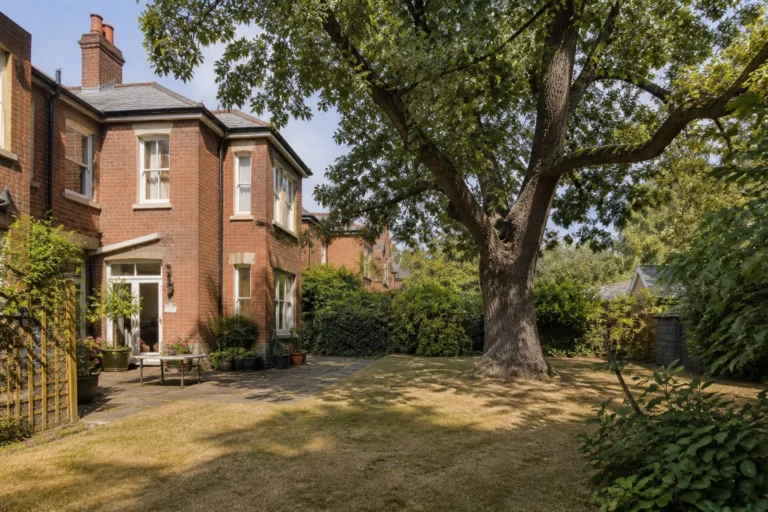
In practice, the trees to look at first are those next to roads, buildings, service networks such as power lines, and paths or routes the public use often. An ash in the middle of a field with no one beneath it is a very different case from one leaning over a drive or a public footpath.
The GOV.UK guidance suggests annual monitoring between late July and early August, when trees are in full leaf and crown condition is easiest to judge. Trees you notice now, as leaves drop, can be noted and rechecked in that window next summer.
Why felling diseased ash is a job for trained hands
An ash with advanced dieback is a different job from felling a healthy tree, and the guidance is clear about who should do it. Natural Resources Wales says only trained and experienced tree surgeons or forestry workers should work on ash trees showing obvious or advanced symptoms. It also notes that mechanised felling, harvesters or tree shears give operators greater protection than felling or pruning with a chainsaw.
Permissions to check before any wood is cut
This is a general outline, not legal advice, and the details of each site matter. According to the GOV.UK guidance, felling diseased ash in woodland in England still requires a Forestry Commission felling licence unless the trees are dead or pose a real danger to public safety. Natural Resources Wales describes the dangerous-tree exemption as covering a real and immediate danger, not a perceived one, and warns that felling without a licence may result in penalties.
Two further points from the Welsh guidance are worth knowing. A council notice under the Highways Act 1980 exempts only the specific trees it identifies, and a council letter warning of potentially diseased ash is not considered enough to count as an exemption. A felling licence will usually come with conditions to restock the land by replanting or natural regeneration, and failing to meet those conditions is an offence under the Forestry Act 1967.
If land is designated for conservation, such as an SSSI (Site of Special Scientific Interest), or is ancient woodland, Forest Research advises seeking help from conservation agency advisers. On SSSIs, written consent from Natural England is needed before existing management changes.
What to leave standing or on the ground for wildlife
Not every piece of a felled ash needs to end up in the log store. At least 955 species use ash trees as habitat across the UK, according to the GOV.UK guidance. Natural Resources Wales adds that 78 threatened lichen species grow on ash in Britain, 34 of them with ash as a significant host, and that most rare lichens grow on mature trunks more than 50cm in circumference.
Where ash carrying rare lichens stands in a higher-risk spot, the Welsh guidance suggests keeping the lower 3 metres of trunk where possible, as most known colonies sit up to that height. Felled trunks can be left where they fall with the lichen facing sideways.
Dead wood has its own benchmarks. The UK Forestry Standard proposes a minimum of 20 cubic metres per hectare, the UK Woodland Assurance Standard asks for at least 3 standing or fallen decaying trees per hectare, and around 100 cubic metres per hectare is considered desirable on most SSSIs. Even on a smallholding, a log pile or standing monolith left in a quiet corner could make a difference.
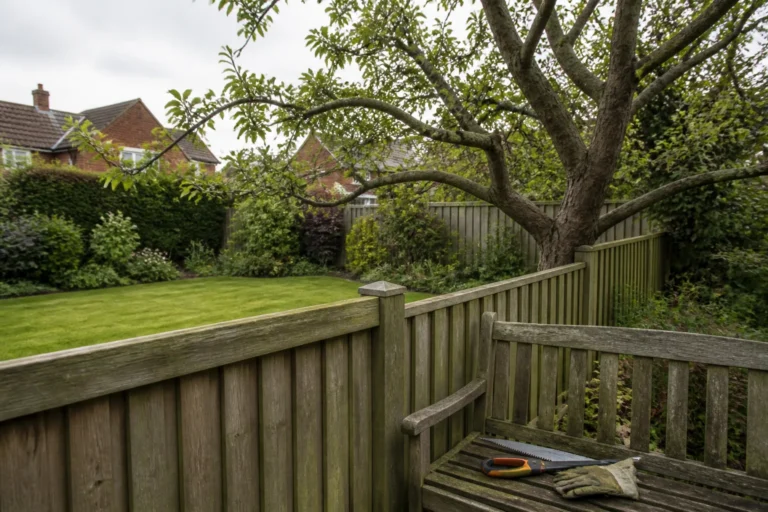
Hedgerows need a lighter touch. Natural Resources Wales says sixty percent of hedgerow trees are ash, and that coppicing or laying them makes them more vulnerable to infection, so it should be avoided. Shoots that regrow from the stumps of felled, infected trees are also not recommended for use, because the disease persists in the roots.
Replacing ash on your land
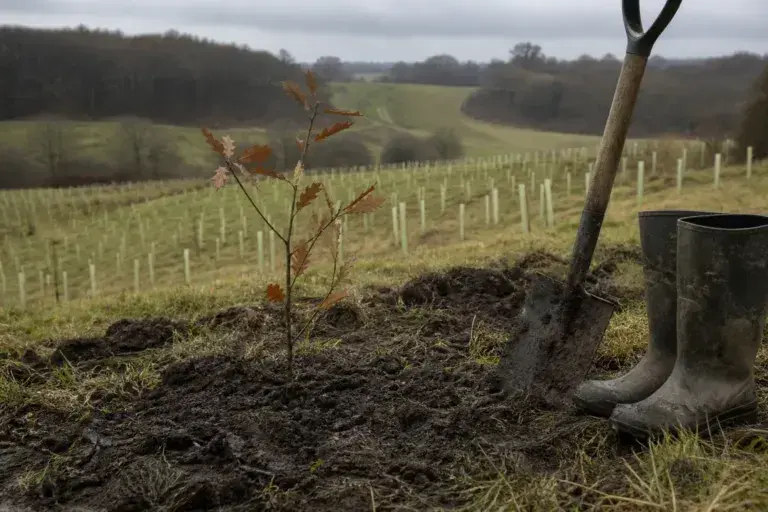
Forest Research lists alternatives by soil type. On brown earth soils, the options include aspen, beech, birch, cherry, field maple, hornbeam, oak, lime, rowan, sweet chestnut and sycamore. On ground-water gleys (soils that stay wet from a high water table), alder, aspen, willow and oak are possible. On rendzinas, the thin soils over chalk or limestone, beech, birch, field maple, whitebeam, hawthorn, holly and the wayfaring tree could be considered.
For wildlife, oak stands out. Sessile and pedunculate oak together support 67% of ash-associated species (640 of the 955), and hazel supports 55 of the 58 mosses and liverworts, known as bryophytes, that depend on ash. When buying trees, the GOV.UK guidance warns that planting stock from continental Europe carries a significant biosecurity risk and recommends only plants certified Plant Healthy.
For Leicestershire homeowners and landowners with ash near boundaries, drives or public paths, the message is simple: get a proper assessment before deciding to fell, check whether a licence or consent applies, and plan replacement planting with native species that suit your soil. The official guidance may be written for woodland managers, but the same practical principles apply at home. If you would like a qualified arborist to look at an ash on your property, we are always happy to help.