A first-of-its-kind seed-spreading trial in the Peak District shows how drones could help replant steep, hard-to-reach ash-damaged woodland.
For homeowners and land managers in Leicestershire dealing with ash dieback, a new trial in the Peak District offers an encouraging sign of how damaged woodland might be restored in places that are difficult to access on foot.
A first-of-its-kind drone seed-spreading project has launched in ravine woodlands in the Peak District, where steep slopes and fragile ground make traditional planting methods challenging. The trial is designed to support recovery in areas where ash trees have been badly affected by the disease and where natural regeneration alone may be too slow or patchy.
Why the trial matters
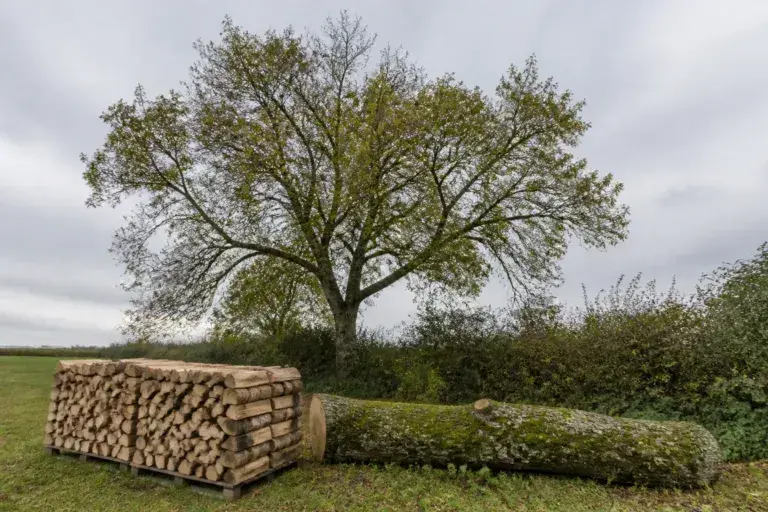
Ash dieback has changed the look and structure of many woods across the East Midlands, including mature roadside trees, hedgerows and smaller woodland blocks. In steep or remote sites, removing dead trees and re-establishing a diverse canopy can be especially difficult, time-consuming and expensive.
That is where drone seeding could make a difference. By spreading seed over inaccessible slopes, drones may help woodland managers introduce a wider mix of native species more quickly than would be possible by hand. The approach is being tested in ravine woodland, a habitat where traditional access is limited and where restoration work must be carried out with care.
How drone seeding could help
The idea is not to replace all conventional planting, but to add another tool for hard-to-reach sites. Drones can cover ground that would otherwise require rope access, specialist machinery or repeated manual visits. In the right conditions, that could reduce disturbance to soils and existing vegetation while helping to establish new tree cover.
For ash-affected woodlands, the goal is to create a healthier, more resilient mix of species rather than simply replace lost ash with a single alternative. That matters for long-term woodland recovery, biodiversity and the ability of woods to withstand future pests, diseases and climate pressures.
What it means for Leicestershire homeowners
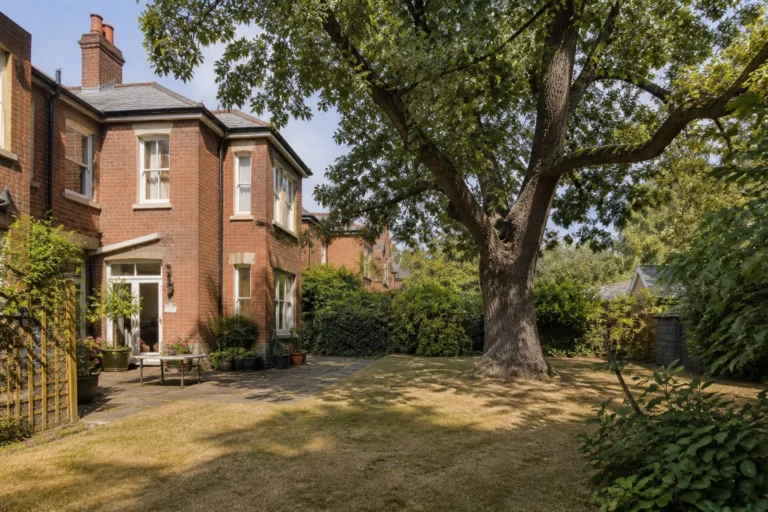
Most homeowners will not be restoring ravine woodland, but the principle is relevant at a much smaller scale. If ash dieback is affecting trees on steep banks, awkward boundaries or inaccessible corners of a garden or smallholding, the Peak District trial shows how new methods are being developed to tackle exactly those kinds of challenges.
In practice, the first step for domestic trees is still a proper assessment. Signs such as crown dieback, dead twigs, lesions on shoots and reduced leaf growth can indicate ash dieback, but not every stressed ash tree needs immediate removal. A qualified arborist can advise on safety, retention, pruning or phased replacement planting.
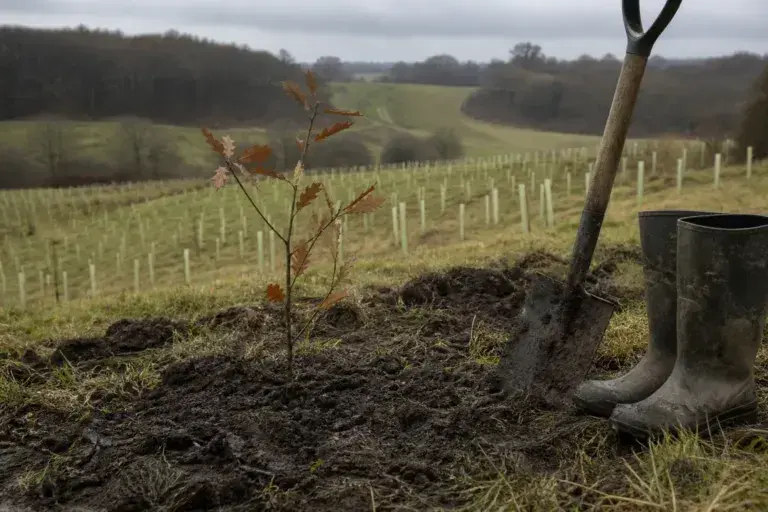
Where trees do need to come out, replacement planting is worth planning early. A mixed planting of suitable native and climate-resilient species is usually a better long-term approach than relying on one species alone. On sloping or hard-to-access ground, smaller stock, careful mulching and mulched seed methods may be more practical than large standard trees.
A practical reminder to plan ahead
The Peak District trial is a reminder that ash dieback recovery is not just about removing dead trees. It is also about finding workable ways to restore canopy, habitat and landscape value in places where access, cost and safety can make that difficult.
For Leicestershire property owners, especially those with mature ash near boundaries, driveways, public paths or steep ground, the message is simple: get advice early, think in terms of replacement rather than just removal, and choose a planting strategy that suits the site. Innovation in woodland restoration may be taking flight above the Peak District, but the same practical principles apply at home.