Leicestershire County Council has asked homeowners and landowners to check their ash trees, so here is how to recognise the disease and when to call in a qualified arborist.
The main signs of ash dieback to look for are a thinning canopy, dark lesions on the bark and branches dying back from their tips. If you notice any of these on an ash in your garden, on a smallholding or along a field boundary, the sensible next step is a proper assessment by a qualified arborist or tree surgeon. An arborist can tell you how far the disease has progressed and what, if anything, needs doing.
Leicestershire County Council has asked homeowners and landowners across the county to check their ash trees and manage affected trees safely. Forestry Journal reported the appeal on 18 July 2026. For anyone with mature ash on their land in Leicestershire, it is a good moment to know what to look for and when to act.
Why Leicestershire homeowners are being asked to check their ash
The council has described ash dieback as a “challenge” facing the county, and it has asked homeowners to help tackle it. Many of Leicestershire’s ash trees are on private land, and the council is working to raise awareness among residents, businesses and landowners.
Adam Tilbury, the council’s cabinet member for environment, said the disease continued to have a “significant impact” on the county. He also said that “everyone has a role to play in protecting public safety and preserving our natural environment.” In practice, much of the job of spotting ash dieback sits with property owners. You are usually the person who sees a tree every day, so you are also the person most likely to notice when something changes.
What ash dieback is and how far it has spread
Ash dieback is a destructive disease caused by a fungus. That fungus originated in Asia and was introduced to Europe about 30 years ago.
It was first recorded in the UK in 2012. Over the 14 years since then, it has wiped out thousands of ash trees across the country. Experts estimate that 85 per cent of all ash trees could be affected by the disease.
Those are sobering numbers, and they explain why the council wants more eyes on the trees. Even so, an estimate covering all ash trees says little about any one tree in your garden. The right response to a single ash still depends on how badly it is affected and where it stands, which is why a look at the tree itself matters more than the headline figures.
How to spot the signs of ash dieback
The council has urged landowners to “remain vigilant”. None of the signs it highlighted needs specialist knowledge to spot, though it helps to know what each one looks like on a real tree.
A thinning canopy is often the first thing people notice. The canopy is the leafy crown of the tree. On an affected ash it carries fewer leaves than it should, so you can see more sky through it than you would expect from a healthy tree of a similar size.
Dark lesions on the bark are the next thing to check. Lesions are damaged areas, and on an ash with dieback they show up as darker patches or marks on the bark of the trunk, branches or younger shoots.
Dieback in the branches is the sign that gives the disease its name. Twigs and branches die back from the tips towards the trunk, so you may see bare, brittle-looking ends on outer branches while the inner parts of the crown still carry leaves.
Timing makes a difference. Canopy thinning is usually easiest to judge in summer, when the tree should be in full leaf. In autumn, as leaves turn and fall naturally, it becomes much harder to tell a sparse crown from ordinary seasonal change. Outside the summer months, you can still check for dead branch tips and marks on the bark, then take a closer look at the canopy the following summer.
A few photographs taken from the same spot each year can help too. They give you, and any arborist you speak to, a simple record of whether a tree is holding steady or getting worse.
When a dead or weakened ash becomes a safety concern
Spotting the disease and needing to act are two different things. According to the council, ash dieback can pose a threat to the public because it can cause trees to shed branches or to fall. Tilbury put it this way: “Dead or weakened ash trees can present a serious risk to people, property and our highways if not properly maintained.”
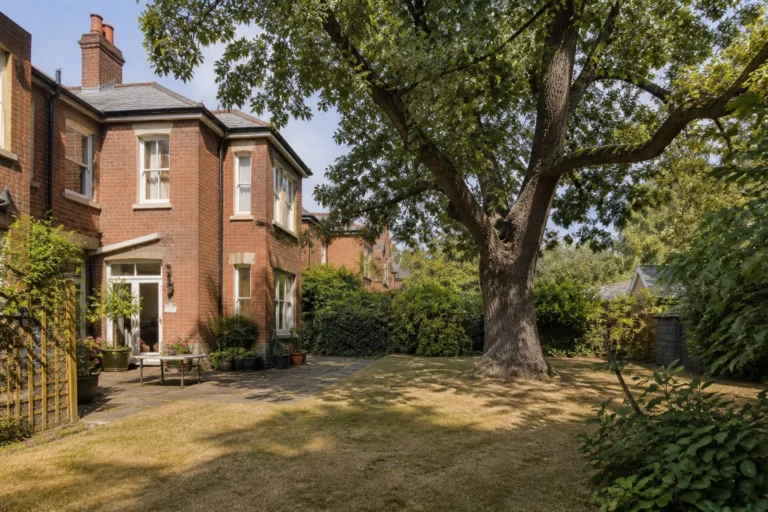
A struggling ash in the far corner of a field, away from paths and buildings, may simply be monitored and managed over time. The same tree overhanging a house, a driveway, a public footpath, a road or a neighbour’s garden calls for earlier attention, because there is more beneath it if a branch does come down.
Ash on steep banks and awkward boundaries is worth flagging early as well. Arranging safe access on those sites usually takes longer, so it helps to start the conversation before a tree declines further.
What to do if you think your ash is affected
Tilbury said it is “vital that landowners understand their responsibilities in managing affected trees safely”, and he urged people to “please take the time to check your trees and seek professional advice where necessary.” Forestry Journal’s report doesn’t set out the specific legal duties involved, so if you are unsure where you stand, raise it when you take advice.
A practical approach looks something like this:
- Walk round your property and identify each ash tree, noting what sits beneath or beside it.
- Check each tree for the signs described above, starting with the ones that stand over buildings or places where people and vehicles pass.
- Ask a qualified arborist or tree surgeon to assess any tree that shows signs of the disease. Not every affected ash needs to come down straight away. The options usually include retention with regular monitoring, pruning out dead or weakened branches, phased removal over time, or safe removal where a tree is badly affected and close to people or property.
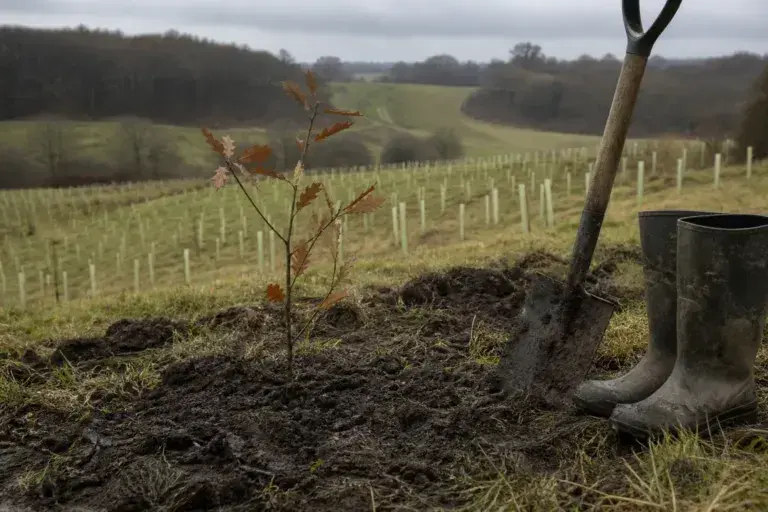
- Plan replacement planting with other native species, so the canopy and biodiversity on your land can recover as ash declines.
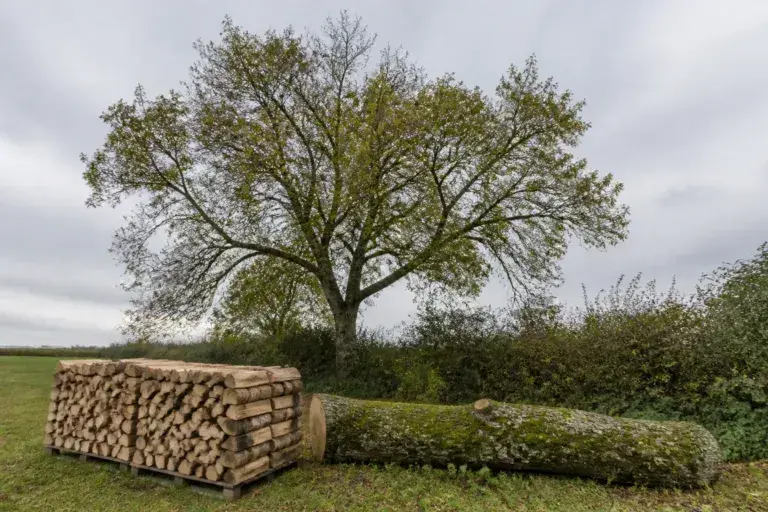
One step is best avoided: trying to fell a weakened ash yourself. Dead and dying ash can become brittle and behave unpredictably once work starts. That makes it a job for trained tree surgeons with the right equipment and experience of working on diseased trees.
The bigger picture for Leicestershire property owners
Ash dieback has been present in the UK since 2012 and is now a long-term part of managing trees in the county. The council’s appeal puts the first check in the hands of the people who own the trees, and with good information that check is well within most owners’ reach.
For Leicestershire property owners with mature ash, the message is simple: check your ash trees each summer, start with the ones near where people and vehicles pass, and get a qualified arborist’s view before anything is cut down. The council’s appeal covers the whole county, but the same practical principles apply at home.
If you would like a second opinion on an ash tree on your property, the team at Harbour Tree Care is always happy to take a look and talk through the options.