Wood burners and open fires are still legal, and the rules that matter most for Leicestershire households are already in force, whatever the 2026 consultation eventually brings.
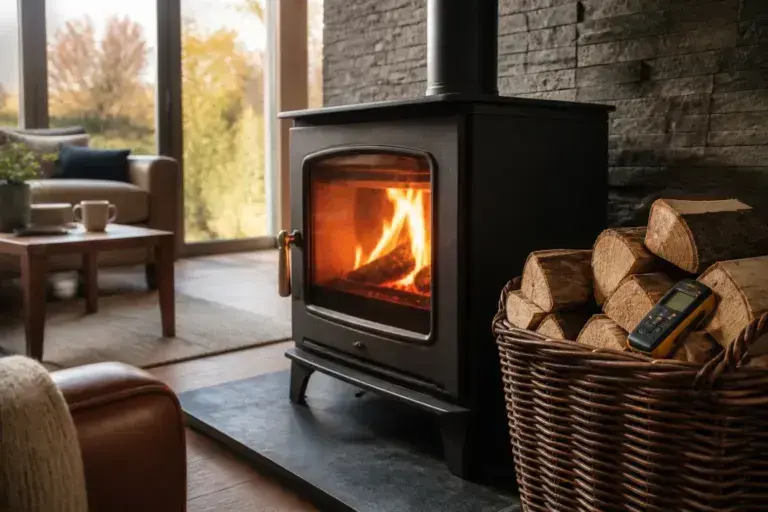
Yes, you can still light a wood burner or open fire in Leicestershire. The wood burner rules that matter most to households are already in force. They are mostly about fuel: what can be sold, how dry logs must be and, in some streets, which appliances may burn wood at all. For a typical home with a working stove and a stack of dry logs, very little needs to change.
The reason for this guide is a consultation. The UK Government and the governments of Scotland, Wales and Northern Ireland asked for views from January to March 2026 on tighter rules for new stoves and for fuel suppliers. Environmental Protection UK has set out the current rules in a clear guide and notes that the government is still considering the responses. Below, we explain what applies now, what was proposed and what it means for the logs you buy and burn.
What the rules mean for most homes in England
A handful of fuel rules apply to every household in England. It makes no difference whether you live in a Leicester terrace or on a smallholding miles from the nearest town. They came in through changes made in 2021 and 2023, and they mostly govern what can be sold.
Wood sold in units of less than 2 cubic metres must be certified as Ready to Burn. That certification means a moisture content of 20% or less. In practice it covers bags of logs, nets and most of the smaller loads people buy for a single stove.
Coal changed too. House coal, the traditional bituminous coal many people grew up with, can no longer be sold for domestic use. Manufactured solid fuels, such as briquettes, must be low in sulphur and produce little smoke.
Then there is the smoke itself. Outside a smoke control area it is an offence to let dark smoke come from any chimney, but ordinary chimney smoke has no set limit. That gives most rural and village households a fair amount of freedom.
Neighbours still count. Smoke that repeatedly affects a neighbour’s home can be treated as a statutory nuisance under the Environmental Protection Act 1990. The council can serve an abatement notice, which is a formal instruction to stop the problem. Breaking that notice is an offence. We can only offer general guidance here, and anyone facing a notice should take proper advice. Even so, the practical lesson is straightforward: a fire that burns cleanly is far less likely to cause friction next door.
What changes if you live in a smoke control area
Smoke control areas are set by councils. Inside them, the rules are stricter. Smoke must not come from a chimney unless you are burning an authorised smokeless fuel or using an exempt appliance with the fuel it is approved for. For wood, that usually means a stove approved by Defra for burning wood in a smoke control area. Logs on an open fire would not meet the rules. Nor would logs in a stove without that approval.
Enforcement has become simpler for councils. Since 2022, those in England have been able to deal with chimney smoke in a smoke control area through a civil penalty of £175 to £300, instead of taking the householder to court. Wales has used the same penalties since July 2025.
Householders are not the only ones with duties. Selling unauthorised fuel for use in a smoke control area is also an offence, so suppliers carry responsibility as well.
Smoke control areas exist in Scotland, Wales and Northern Ireland too, with similar rules on authorised fuels and exempt appliances. The fuel rules described in this guide, though, are the ones that apply in England.
Not sure whether your address is covered? Your district or borough council can tell you. It is worth checking even if you have burned wood for years without a second thought. It matters most before you buy or fit a new stove, because the right approval needs to be in place from the start.
What the 2026 consultation proposed
The background is air quality. Wood burners and open fires are now one of the largest sources of fine particle pollution in the UK. These are the tiny particles known as PM2.5, small enough to be breathed deep into the lungs. The proposals aim to bring that pollution down over time.
Four main changes were put forward:
- A tighter emission limit for new stoves, cutting it from 5 grams of smoke per hour to 1 gram (plus the existing small allowance linked to heat output), coming in three to five years after any new law.
- A compulsory label on new stoves showing a pollution rating from A to C, with a health statement.
- Health warnings on packs of wood and coal.
- Higher penalties, of up to £2,000, for suppliers in England who sell wet wood or banned fuels.
For anyone who already owns a stove, there is a reassuring detail. The changes would apply to new stoves, not to those already installed. No decisions have been published yet.
If the proposals go ahead, most households will notice them at two points. One is when buying a replacement stove, where an A to C label could make comparisons easier. The other is on the shelf, where packs of logs may carry a health warning. Neither would stop you burning dry wood in the stove you have.
How to buy legal seasoned logs
Firewood is the part you control every week. It is also where the rules and your heating bill meet. For bags and smaller loads, the Ready to Burn mark is a quick sign that the wood has been dried to the standard the law expects.
Larger loads are different. A delivery of 2 cubic metres or more falls outside that certification requirement, so the quality rests on how the supplier has dried and stored the wood. Ask questions whatever the size of your order. A good supplier should be happy to tell you the moisture reading and how the logs were kept. Ask how long the wood has been seasoning and whether it was stacked under cover.
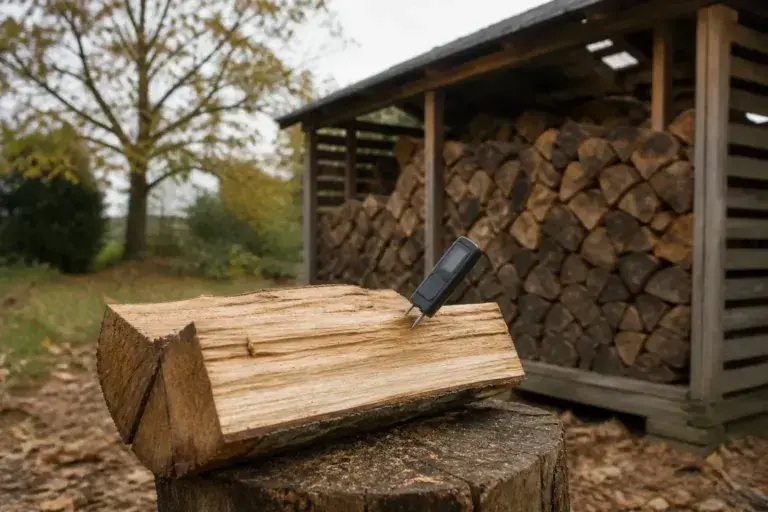
Checking logs yourself is easy and inexpensive. Buy a moisture meter. Split a log and take the reading on the fresh face, since the outside can dry faster than the middle. Try a few logs from different parts of the load, not just one from the top.
Wet wood is exactly what the proposed supplier penalties target. A seller who can show you dry readings is offering peace of mind as well as fuel.
There is a cost side too. When logs are damp, a good share of the fire’s energy goes into boiling off water before any heat reaches the room. Dry logs usually light more easily and burn hotter. They give more warmth for the money, which matters as living costs rise. They also tend to produce less smoke in the flue and out of the chimney.
One common mistake is buying cheap logs described as seasoned and burning them the same week. If the reading is high, they are better left to dry. Another is mixing a damp batch in with dry wood to stretch it further. The damp logs simply drag the whole fire down.
Storing and burning logs so they stay legal and efficient
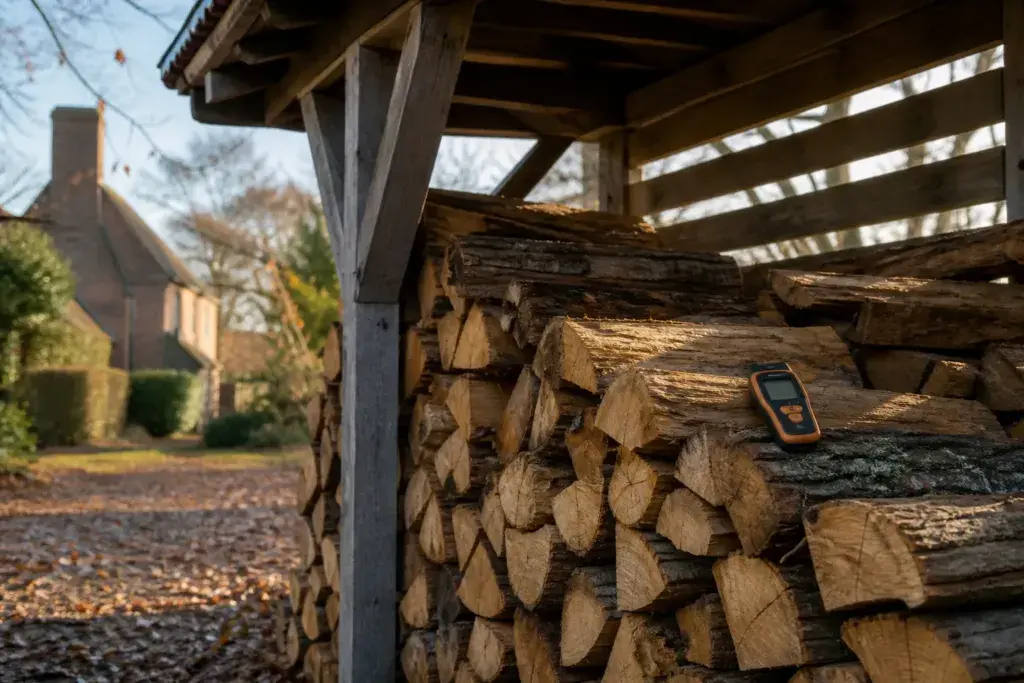
Even well-seasoned logs can take on moisture again if they sit in the wrong place. Store wood under cover with air flowing around it, ideally for at least a year. A log store with a roof and open or slatted sides works well. A tarpaulin wrapped tightly over a pile tends to trap damp, so leave the sides open if you use one. Raising the stack off the ground on pallets or rails also helps.
Recheck a few logs before bringing a batch indoors. It takes a minute. It saves a lot of frustration on a cold evening.
Sweep the chimney at least once a year. A clean flue draws better, so the fire gets going cleanly from the first match.
Avoid leaving the stove smouldering overnight with the vents closed. It can feel like a thrifty way to keep the heat in. In reality a starved fire produces heavy smoke and wastes fuel. A short, hot fire with the air set correctly is usually more efficient, and much kinder to the people next door.
Good habits pay off in more than one way. Cleaner burning lowers the chance of dark smoke and of the repeated smoke that leads to nuisance complaints. Each load of logs also lasts longer.
Keeping the fire going this winter
The consultation may bring changes in time, mostly for stove makers and fuel sellers. For Leicestershire households, the useful work happens at home and is already within reach.
The message is simple: buy dry logs and check the reading yourself, keep them somewhere airy and covered, and confirm with your council whether your street is in a smoke control area. National rules on stoves and fuel may keep shifting, but a warm, clean-burning fire still comes down to what goes into your own hearth.
If you would like seasoned firewood, get in touch and we will be glad to help.